
(Versión en español al final)
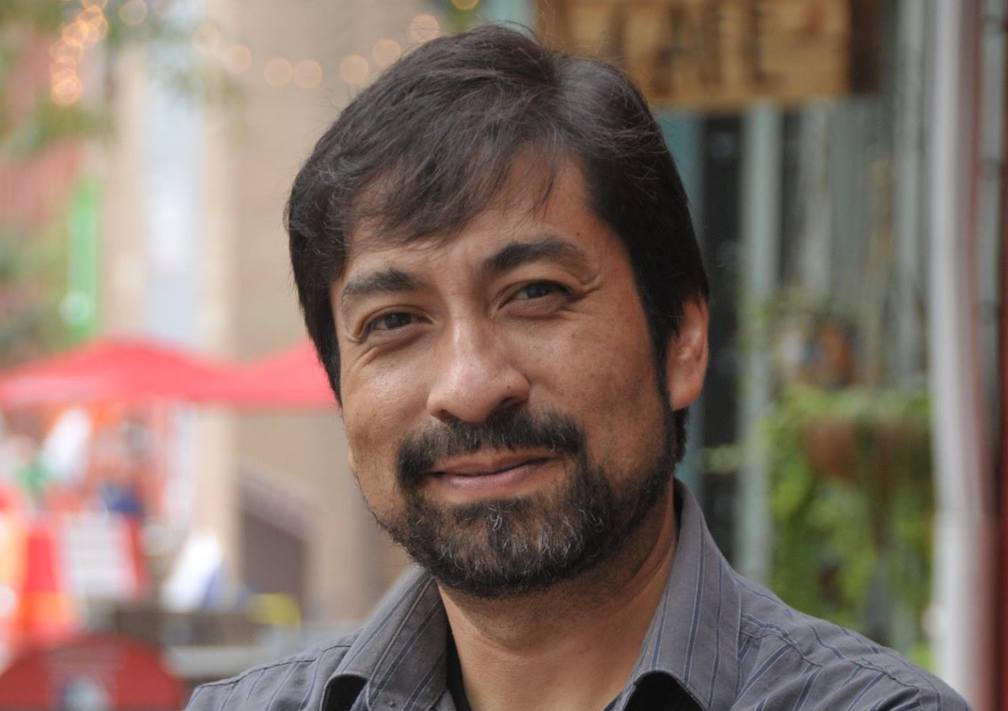
By Obed Arango
While national politics dominates the headlines, many of the decisions that most directly shape our daily lives are made much closer to home. Among the most consequential local institutions are school boards. Their decisions extend far beyond the classroom. They help determine what kind of community we seek to build.
A school district does more than administer budgets and academic programs. It participates in the formation of generations of young people who will learn not only mathematics, science, and history, but also how to engage with those who are different from them, resolve conflicts, exercise civic responsibility, and understand an increasingly diverse world. A school board therefore carries a responsibility that is educational in nature and profoundly democratic in practice.
Democratic governance does not simply mean winning an election. An electoral victory confers the authority to govern, but that authority should be exercised with the community, not imposed upon it.
This distinction is particularly relevant today in Norristown, Pennsylvania.
During the September 28 public meeting, Afro-Latina and Puerto Rican activist Carmina Taylor and I, a Mexican immigrant, founder and executive director of the Centro de Cultura, Arte, Trabajo y Educación (CCATE), and professor of public policy at the University of Pennsylvania, raised concerns about decisions by the board. Among them were the elimination of the diversity, equity, inclusion, and belonging position and the adoption of measures that, in our view, risk criminalizing students rather than addressing the underlying challenges they face.
The use of metal detectors as a response to school violence is one such example. Our objection does not dismiss the importance of school safety. On the contrary, it calls for a broader understanding of what genuine safety requires: conflict resolution, mental-health resources, intercultural communication, civic education, opportunities for artistic expression, and sustained educational support. Metal detectors may create a greater sense of security, but relying on them as a central response risks reducing a complex social and educational problem to a question of surveillance and control.
Following our remarks, board member Jordan Alexander stated: “I just don’t appreciate impostors of our community who are from other places … people who are upset that an election didn’t go the way that they panned out now trying to sabotage what the community has uh entrusted us to do, which is move forward.”
Characterizing those who question public decisions as “impostors” and democratic dissent as “sabotage” should concern everyone, regardless of where they stand on individual policies. Public disagreement is not an obstacle to democracy. It is part of democracy.
An election confers the authority to govern. It does not confer immunity from scrutiny, criticism, or dissent.
Those who question the decisions of elected officials are not impostors. They are members of the public exercising a fundamental democratic right.
When criticism is treated as sabotage and belonging is used to determine whose voice deserves to be heard, the issue becomes larger than any single school-board decision. What is ultimately at stake is whether our public institutions will remain spaces where disagreement is respected, participation is protected, and every member of the community retains the right to speak truthfully and freely to those who hold power.
Por Obed Arango
Mientras la política nacional acapara titulares, buena parte de las decisiones que afectan nuestra vida cotidiana se toman mucho más cerca de casa. Entre las instituciones locales con mayor influencia están las juntas directivas de los distritos escolares. Sus decisiones trascienden las aulas: contribuyen a definir qué tipo de comunidad queremos construir.
Un distrito escolar no solamente administra presupuestos y programas académicos. Participa en la formación de generaciones que aprenderán allí cómo relacionarse con quienes son diferentes, resolver conflictos, ejercer responsabilidades cívicas y comprender el mundo. Por eso, una junta escolar tiene una responsabilidad que es educativa, pero también profundamente democrática.
Gobernar democráticamente no significa simplemente haber ganado una elección. La victoria electoral oto autoridad para tomar decisiones con la comunidad, no de manera autoritaria.
Esta reflexión resulta necesaria hoy en Norristown, PA. Durante la reunión pública del 28 de septiembre, la activista afrolatina y puertorriqueña Carmina Taylor y quien escribe, inmigrante mexicano y fundador del Centro de Cultura, Arte, Trabajo y Educación (CCATE) y profesor de política pública de la Universidad de Pennsylvania, cuestionamos decisiones de la junta y expresamos nuestra preocupación por eliminar la posición de diversidad, equidad, inclusion y pertenencia, y por activar medidas que criminalizan al estudiantado.
Un ejemplo son los detectores de metales como respuesta a la violencia escolar. Nuestra objeción no consiste en ignorar la seguridad, sino precisamente en exigir una concepción más amplia de ella: resolución de conflictos, salud mental, comunicación intercultural, educación cívica, oportunidades artísticas y acompañamiento formativo. Se ha comprobado que los detectores de metales son una respuesta reduccionista que disminuye la ansiedad de la comunidad, pero que poco contribuye a resolver el problema real.
Después de nuestras intervenciones, el directivo Jordan Alexander comentó: “No valoro que impostores de nuestra comunidad que vienen de otros lugares… ahora tratan de sabotear aquello que la comunidad nos confió”.
Deshumanizar a quienes cuestionan con el termino “impostor” y describir el acto democrático como “sabotaje” muestra un pobre ejercicio de sus funciones y una manera abierta de alejar a la comunidad para no ejercer su derecho democrático.
Una elección concede el derecho a gobernar; no concede inmunidad frente al cuestionamiento. Quienes cuestionan decisiones públicas no son impostores. Sino ciudadanos ejerciendo sus derechos. No podemos permitir este atropello porque lo que sigue es el control total incluso sobre las voces del resto de la comunidad.