
Se planean realizar análisis en pozos privados; el lunes se habilitará un centro de atención telefónica para responder a las preguntas de los residentes
Por HOY en Delaware
(English version below)
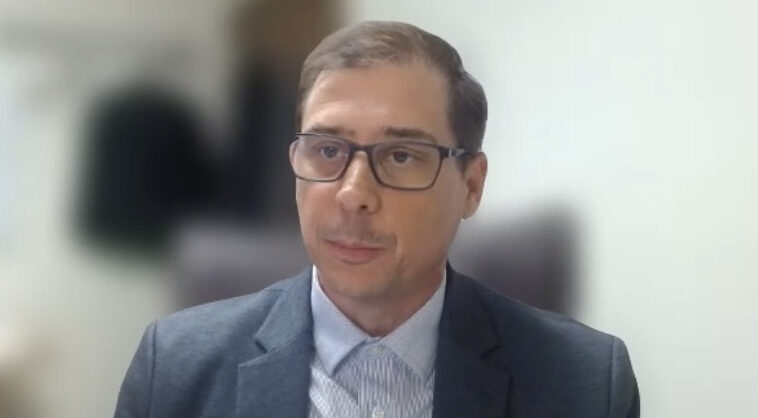
El viernes 20 de noviembre, el Dr. Harrison Hines, director de Salud Pública; Greg Patterson, secretario de DNREC, y Don Clifton, secretario de Agricultura de Delaware dieron rueda de prensa informativa de una posible contaminación por pesticidas al noroeste de Greenwood.
El Departamento de Agricultura de Delaware (DDA, por sus siglas en inglés), el Departamento de Recursos Naturales y Control Ambiental (DNREC) y el Departamento de Salud y Servicios Sociales (DHSS) están colaborando para investigar una posible contaminación por pesticidas en el área inmediata al aeropuerto Chorman, cerca de Greenwood. La investigación determinará si los suministros de agua potable cercanos podrían verse afectados, así como el posible impacto ambiental. Esta investigación estatal coordinada se lleva a cabo de manera simultánea a una investigación realizada por la División de Investigación Criminal de la Agencia de Protección Ambiental de los EE. UU. (EPA) y el Departamento de Justicia de los EE. UU., quienes notificaron a las agencias estatales sobre la posible contaminación en los alrededores del aeropuerto.
Los análisis preliminares, confirmados el 18 de noviembre, han detectado niveles elevados de pesticidas en muestras de agua superficial recolectadas en una zanja dentro de los terrenos del aeropuerto y en dos puntos externos, situados aproximadamente a media milla y dos millas del aeropuerto. Algunos de los contaminantes identificados podrían representar riesgos para la salud humana y animal si se presentan en niveles elevados. Por el momento, no existen pruebas de que personas o animales hayan estado expuestos a dichos niveles; las investigaciones y los análisis continúan en curso.
Aunque se han detectado pesticidas en muestras de agua superficial, aún se desconoce si los pozos privados de agua potable en la zona se han visto afectados. El agua potable en esta área proviene, en su mayor parte, de pozos privados individuales; por ello, es necesario realizar más análisis para determinar si existen contaminantes en dichos suministros.
A medida que avanza la investigación, las agencias estatales están tomando medidas para comenzar a analizar los pozos privados de agua potable en las próximas semanas. Esto incluye la identificación de los pozos que serán sometidos a pruebas, basándose en los resultados del muestreo ambiental. Los análisis comenzarán tan pronto como se completen los preparativos iniciales; los propietarios de los pozos recibirán sus resultados, junto con recomendaciones sobre las precauciones a tomar o las opciones de tratamiento disponibles.
El lunes 23 de noviembre, al mediodía, se habilitará un centro de atención telefónica para responder a las preguntas de los residentes sobre la investigación y los análisis de los pozos privados. A partir del lunes, los residentes pueden comunicarse a través de la línea gratuita 1-866-408-1899 o al número local 302-672-6100. El centro de atención telefónica estará disponible desde el mediodía hasta las 4:00 p.m. el lunes; de 8:30 a.m. a 4:00 p.m. el martes y el miércoles; de 8:30 a.m. a 12:30 p.m. el jueves 26 de noviembre; y de 8:30 a.m. a 4:00 p.m. el viernes 27 de noviembre.
Mientras se evalúa la seguridad del agua de pozos privados, los residentes que cuenten con pozos y vivan en un radio de 5 millas del aeropuerto Chorman deben considerar las siguientes precauciones para protegerse a sí mismos y a los animales a su cargo:
• No hierva el agua con el fin de eliminar los contaminantes. Hervirla no elimina los pesticidas y, de hecho, puede aumentar su concentración.
• Considere utilizar fuentes de agua distintas a la de su pozo para beber, cocinar, cepillarse los dientes y preparar fórmulas para bebés.
La seguridad del agua de pozo está bajo evaluación; por ello, los residentes y quienes tengan animales a su cargo pueden optar por utilizar otras fuentes de agua disponibles mientras continúan los análisis. Para aquellos residentes que necesiten ayuda para obtener agua potable alternativa, habrá agua disponible el sábado 21 de noviembre, de 9:00 a.m. a 2:00 p.m., en la Farmington Volunteer Fire Company, ubicada en 20920 S. Dupont Highway, Farmington, DE 19950. Es posible que se añadan más fechas según las necesidades de la comunidad.
• Siga utilizando sus fuentes de agua habituales para el aseo personal y el baño. Por el momento, no hay indicios de que bañarse o asearse con agua de pozo sea inseguro.

“Entendemos que los residentes tendrán preguntas sobre lo que estos hallazgos significan para sus familias”, señaló el Dr. Harrison Hines, director de Salud Pública. “Nuestro objetivo es mantener a salvo a los habitantes de Delaware. El acceso a agua potable segura es fundamental; nuestra prioridad es identificar cualquier riesgo potencial, garantizar que se realicen las pruebas pertinentes y ayudar a los residentes a comprender qué medidas deben tomar para proteger su salud”.
Asimismo, se están llevando a cabo muestreos ambientales adicionales para determinar mejor el alcance de una posible contaminación. Las pruebas iniciales realizadas en cuatro pozos de monitoreo —a una profundidad de entre 13 y 16 pies bajo tierra— no detectaron la presencia de pesticidas. El DNREC continúa recolectando muestras de suelo y agua subterránea para determinar si la contaminación se ha propagado y si es necesario realizar análisis adicionales.
“DNREC está llevando a cabo un plan de muestreo inmediato en cerca de 30 ubicaciones dentro de un radio de 2,5 millas —que incluye suelos, zanjas, arroyos y pozos de monitoreo de agua subterránea disponibles— para evaluar si han migrado sustancias químicas fuera de la propiedad y en qué concentraciones; es posible que esta área se amplíe”, señaló el secretario del DNREC, Greg Patterson. “Estos resultados nos ayudarán a comprender mejor el alcance de cualquier posible contaminación y a determinar qué medidas adicionales podrían ser necesarias”.
La fuente de abastecimiento de agua municipal más cercana se encuentra a aproximadamente 3,8 millas del aeropuerto. Por lo general, los sistemas de agua municipales se abastecen de acuíferos más profundos, los cuales podrían verse menos afectados por contaminación proveniente de la superficie que los pozos menos profundos, y se someten a análisis periódicos para detectar contaminantes.
El Departamento de Agricultura de Delaware (DDA) está investigando las prácticas de manejo de pesticidas de la empresa Chorman Spraying, LLC; dicha investigación podría derivar en acciones legales relacionadas con su licencia.
“Proteger los cursos de agua, las aguas subterráneas y la salud pública de Delaware es una prioridad absoluta para nuestro Departamento”, afirmó el secretario de Agricultura de Delaware, Don Clifton. “Según la legislación de Delaware, nuestra Sección de Pesticidas ejerce la supervisión normativa sobre el uso de estos productos. Nuestros inspectores están trabajando activamente en coordinación con DNREC (Departamento de Recursos Naturales y Control Ambiental) y el Departamento de Salud Pública para esclarecer los hechos. Si bien no podemos ofrecer detalles sobre una investigación en curso, cualquier aplicador que infrinja nuestros requisitos deberá responder ante la ley”.
“Soy consciente de que esto afectará a nuestros productores agrícolas. Nos esforzaremos al máximo para proporcionarles información precisa y los recursos necesarios para mitigar estos desafíos”.
Se compartirá más información a medida que avance la investigación. Las agencias estatales evaluarán si se han producido infracciones a las leyes o reglamentos estatales y, cuando corresponda, tomarán las medidas de cumplimiento pertinentes.
****
Private well testing being planned; call center to open Monday to answer residents’ questions
On Friday, November 20, Dr. Harrison Hines, Director of Public Health; Greg Patterson, Secretary of DNREC; and Don Clifton, Delaware Secretary of Agriculture, held an informational press conference regarding potential pesticide contamination northwest of Greenwood.
The Delaware Department of Agriculture (DDA), Department of Natural Resources and Environmental Control (DNREC), and Department of Health and Social Services (DHSS) are working together to investigate potential pesticide contamination in the immediate area around Chorman Airport near Greenwood. The investigation will determine whether nearby drinking water supplies could be affected and any potential environmental impact. This coordinated state investigation is being conducted concurrent with an investigation by the U.S. Environmental Protection Agency (EPA) Criminal Investigation Division and the U.S. Department of Justice, which notified state agencies of potential contamination around the airport.
Preliminary testing, confirmed Nov. 18, has detected high pesticide levels in surface water samples collected from a ditch on the airport property and at two offsite locations approximately half a mile and two miles from the airport. Some of the contaminants identified may pose risks to human and animal health at high levels. There is no evidence at this time that any humans or animals have been exposed at those levels and testing is ongoing.
Although pesticides have been detected in surface water samples, it is not yet known whether private drinking water wells in the area have been affected. Drinking water in this area comes predominantly from individual private wells, and further testing is needed to determine whether any contaminants are present in those supplies.
As the investigation continues, state agencies are taking steps to begin testing private drinking water wells in the coming weeks. This work includes identifying wells for testing based on environmental sampling results. Testing will begin as soon as initial preparations are completed, and well owners will receive their results along with guidance on any recommended precautions or treatment options.
A call center will open Monday, Nov. 23, at noon to answer residents’ questions about the investigation and private well testing.
Beginning Monday, residents can call toll-free at 1-866-408-1899 or locally at 302-672-6100. The call center will be open from noon to 4 p.m. Monday and from 8:30 a.m. to 4 p.m. Tuesday and Wednesday, from 8:30 a.m. to 12:30 p.m. on Thursday, Nov. 26, and from 8:30 a.m. to 4 p.m. Friday, Nov. 27.
While the safety of private well water is being evaluated, residents with wells who live within 5 miles of the Chorman airport should consider the following precautions to protect themselves and animals in their care:
• Do not boil water in an attempt to remove the contaminants. Boiling does not remove pesticides and may increase their concentration.
• Consider using non-well water sources for drinking, cooking, brushing teeth, and preparing infant formula.
Well water safety is being evaluated. Residents and animals in their care may choose to use other available water sources while testing is underway. For residents who need assistance obtaining alternative drinking water, water will be available Saturday, Nov. 21, from 9 a.m. to 2 p.m. at the Farmington Volunteer Fire Company, 20920 S. Dupont Highway, Farmington, DE 19950. Additional dates may be added depending upon community needs.
• Continue using usual water sources for washing and bathing. At this time, there is no indication that bathing or washing with well water would be unsafe.
“We understand that residents will have questions about what these findings mean for their families,” Director of Public Health, Dr. Harrison Hines said. “Our focus is on keeping Delawareans safe. Access to safe drinking water is essential, and our priority is to identify any potential risks, make sure appropriate testing is conducted, and help residents understand what steps they may need to take to protect their health.”
Additional environmental sampling is also underway to better understand the extent of any contamination. Initial testing of four pesticide monitoring wells at depths of 13 to 16 feet below ground did not detect pesticide contamination. DNREC is continuing to collect soil and groundwater samples to determine whether contamination has spread and whether additional testing is needed.
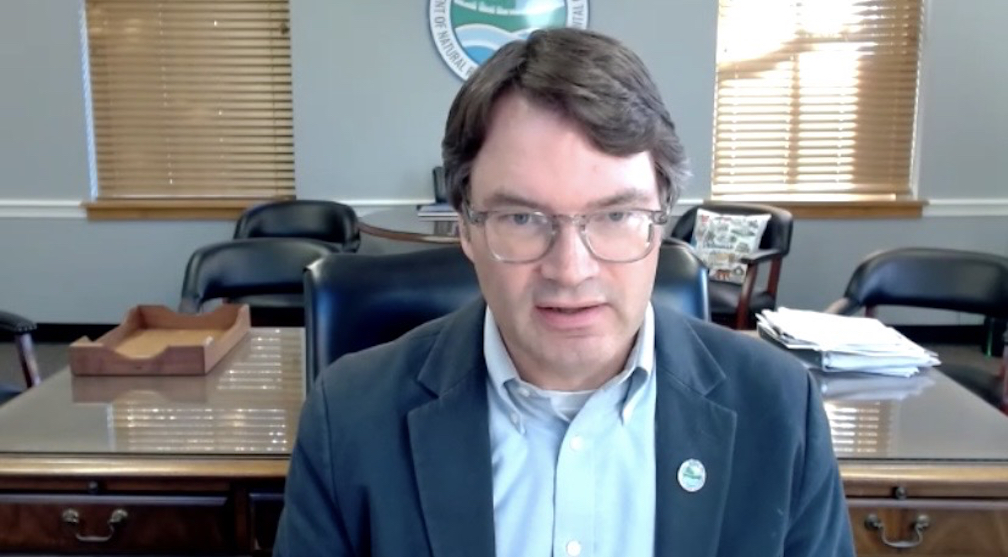
“DNREC is undertaking an immediate sampling plan of about 30 locations in a 2.5 mile radius, including soil, ditches, streams and available groundwater monitoring wells, to assess whether chemicals have moved beyond the property and at what levels, and may expand that area,” DNREC Secretary Greg Patterson said. “These results will help us better understand the extent of any contamination and determine what additional steps may be needed.”
The closest municipal water source is approximately 3.8 miles from the airport. Municipal water systems generally draw from deeper aquifers, which may be less affected by surface-level contamination than shallower wells, and are regularly tested for contaminants.
DDA is investigating Chorman Spraying, LLC’s pesticide handling practices and this investigation may result in legal action regarding its license.
“Protecting Delaware’s waterways, groundwater, and public health is a top priority for our Department,” said Delaware Agriculture Secretary Don Clifton. “Under Delaware law, our Pesticide Section holds regulatory oversight of pesticide use. Our inspectors are actively involved and coordinating with DNREC and Public Health to determine the facts. While we cannot comment on the specifics of an ongoing investigation, any applicator found to be in violation of our requirements will be held accountable under the law.
“I also know that this will impact our agriculture producers. We will work extremely hard to provide producers with accurate information and resources to mitigate those challenges.”
Additional information will be shared as the investigation continues. State agencies will evaluate whether any violations of state laws or regulations have occurred and take appropriate enforcement action when warranted.