
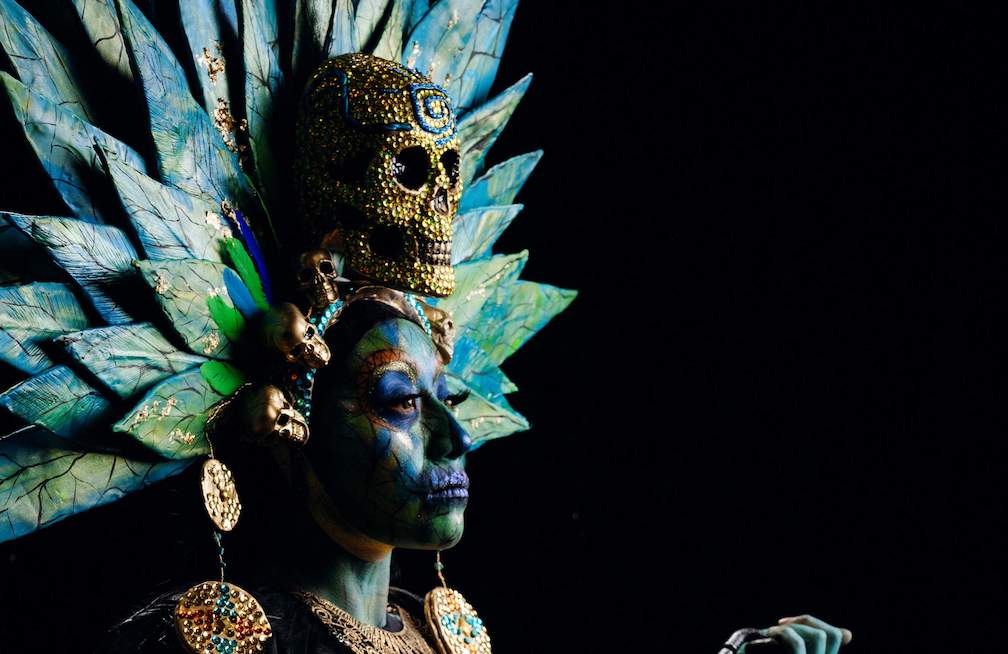

Source: DDA
Wilmington – Mezzanine Gallery (División de las Artes de Delaware), tiene el placer de presentar Diosas & Guerreras: El lienzo viviente (Diosas & Guerreras: The Living Canvas), una exposición individual de arte vestible y fotografía complementaria a cargo de Dayesla Ixtli, que podrá visitarse del 2 al 30 de octubre de 2026 en Mezzanine Gallery en el Carvel State Office Building (820 N. French Street, Wilmington). La entrada es gratuita y abierta al público.
El título de la exposición, Diosas & Guerreras, hace referencia a figuras femeninas poderosas. Inspirándose en mitos ancestrales y en el folclore mexicano, Ixtli transforma el cuerpo humano mediante tocados hechos a mano, armaduras esculpidas, prótesis texturizadas y pintura corporal con efectos especiales (SFX); posteriormente, captura cada transformación final a través de la fotografía. Las mujeres que aparecen en estas imágenes son protectoras divinas, deidades de la naturaleza y guerreras. En conjunto, estas obras desafían los roles limitados que, con frecuencia, se le asignan a la mujer.
Ixtli utiliza el propio cuerpo como lienzo. “Mi práctica como artista visual se basa en el uso transformador de la forma humana como un lienzo viviente”, afirma. Las figuras que crea poseen lo que ella denomina “una fuerza pura, divinidad y autonomía, más allá de una simple ornamentación frágil”.
Entre las obras destacadas se encuentra Mictecacíhuatl: Señora de los Muertos –llamada así en honor a la diosa azteca de la muerte–, que combina un tocado esculpido de técnica mixta con pintura corporal de efectos especiales. En Ninfa (Nymph), un tocado floral elaborado a mano corona a la figura, mientras que Yemayá: Reina de las Aguas se articula en torno a una corona y un tridente realizados artesanalmente. La exposición se inaugura durante el Mes de la Herencia Hispana y concluye justo antes del Día de los Muertos, que se celebra el 1 y 2 de noviembre.
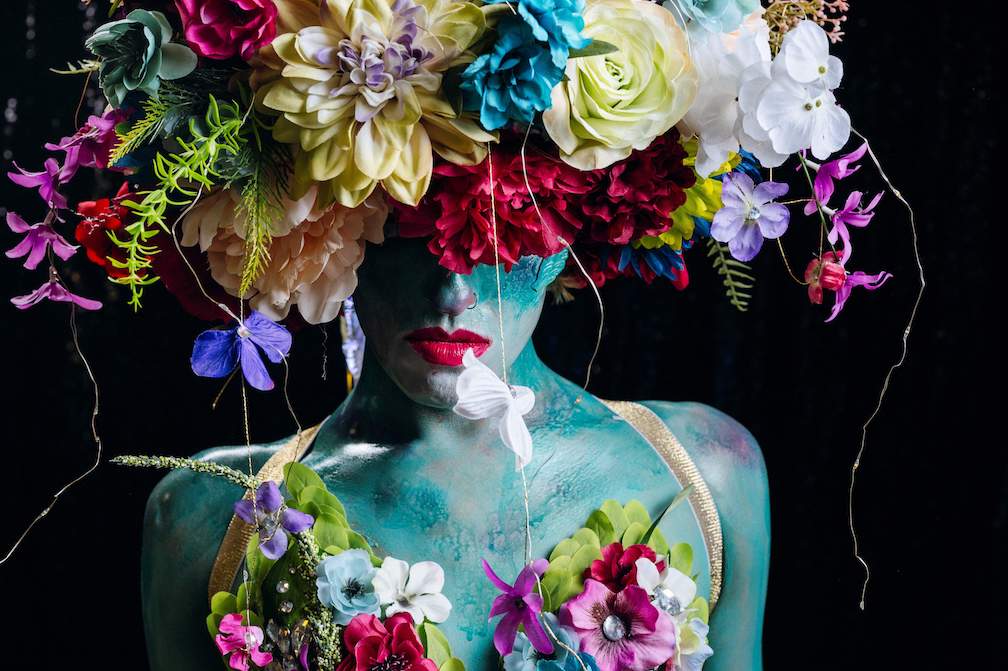
Cada obra constituye un conjunto integral que abarca tocados, accesorios, utilería, vestuario, peinado y maquillaje. Ixtli denomina a la etapa final de este proceso el “momento final de ansiedad”, en el que todos los elementos deben articularse “a la perfección para conformar un producto único”. Ver cómo el público recibe su obra es su recompensa; ella lo describe como “un instante de asombro compartido que nutre a mi niña interior”.
Es autodidacta y comenzó esta práctica como una forma de autocuidado. Tras el nacimiento de su hija menor, en plena pandemia de COVID-19, empezó a crear sus propios diseños de maquillaje artístico, lo cual le brindó una profunda sensación de realización personal. “Fue precisamente en esos tiempos difíciles cuando pude sumergirme de lleno y dedicarme a esta disciplina”, comenta. Solo después de sentar esas bases, cursó una formación profesional en maquillaje para perfeccionar sus habilidades.
La muestra Diosas & Guerreras coincide con el reconocimiento de Ixtli como beneficiaria de la beca Individual Artist Fellow (2026) de la División de las Artes de Delaware, en la categoría de artista emergente dentro de las artes visuales interdisciplinarias. Ixtli planea utilizar esta beca para investigar pigmentos seguros para la piel y adornos naturales que hagan su obra más sostenible. Asimismo, considera este reconocimiento como una validación de su trayectoria artística. “El arte siempre salva vidas, ya sea la del propio artista o la del espectador”, afirma, añadiendo que esta beca le proporciona un “impulso fundamental” para seguir adelante.
****
Mezzanine Gallery presents Dayesla Ixtli’s Diosas & Guerreras: The Living Canvas
Wilmington – The Delaware Division of the Arts’ Mezzanine Gallery is pleased to present Diosas & Guerreras: The Living Canvas, a solo exhibition of wearable art and complementary photography by Dayesla Ixtli, on view October 2-30, 2026 in the Mezzanine Gallery, located in the Carvel State Office Building at 820 N. French Street, Wilmington. Admission is free and open to the public.
The exhibition’s title means “Goddesses & Warriors.” Drawing on ancestral myth and Mexican folklore, Ixtli transforms the human body with handcrafted headpieces, sculpted armor, textured prosthetics, and special effects (SFX) body paint, then captures each finished transformation in photography. The women in these images are divine protectors, nature deities, and warriors. Together, the works push back against the narrow roles women are so often handed.
Ixtli treats the body itself as her canvas. “My practice as a visual artist is rooted in the transformative use of the human form as a living canvas,” she says. The figures she creates carry what she calls “raw power, divinity, and autonomy rather than fragile ornamentation.”
Featured works include Mictecacíhuatl: Lady of the Dead, named for the Aztec goddess of the dead, which pairs a sculpted mixed-media headdress with SFX body paint. In Nymph, a handcrafted floral headpiece crowns the figure, and Yemayá: Queen of the Waters is built around a handcrafted crown and trident. The exhibition opens during Hispanic Heritage Month and closes just ahead of Día de los Muertos on November 1 and 2.
Every piece is a full build of headpiece, accessories, props, wardrobe, hair, and makeup. Ixtli calls the end of that process the “anxious final moment,” when every element has to work together “perfectly as one final product.” Seeing it land with an audience is the reward. She describes it as “a moment of shared wonder that nurtures my inner child.”
She is self-taught, and her practice began as a form of self-care. After her youngest daughter was born in the middle of the COVID pandemic, she started creating her own artistic makeup and found it gave her a real sense of accomplishment. “It wasn’t until those difficult times that I was truly able to immerse myself and dedicate myself to this discipline,” she says. Only after building that foundation did she take formal beauty makeup training to round out her skills.
Diosas & Guerreras comes as Ixtli marks her recognition as a 2026 Delaware Division of the Arts Individual Artist Fellow in the emerging artist category for interdisciplinary visual arts. She plans to use the fellowship to explore body-safe pigments and natural adornments that make her work more sustainable. She also sees it as validation of her path as an artist. “Art is always saving lives, whether it is for the artist or the spectator,” she says, and the fellowship gives her an “essential push” to keep going.